Most organisations want to use modern Generative AI, but many of them can’t use public AI tools. The reason is simple: these tools process data outside the country, outside the organisation’s control, and sometimes even across multiple global regions. For businesses and government teams that deal with sensitive information, this is totally unacceptable.
The solution many teams are now turning to is on-premise GenAI, AI that runs fully inside their own servers or their own private cloud. This gives them the power of AI without sending any data out. All GenAI processing with NodeShift AI happens within your own firewalled network; no data, prompts, embeddings, or logs ever leave your servers. This meets strict residency requirements similar to those followed, especially in GCC countries like Saudi Arabia, UAE, Qatar, Bahrain, Oman, and Kuwait, with strict Data residency laws.
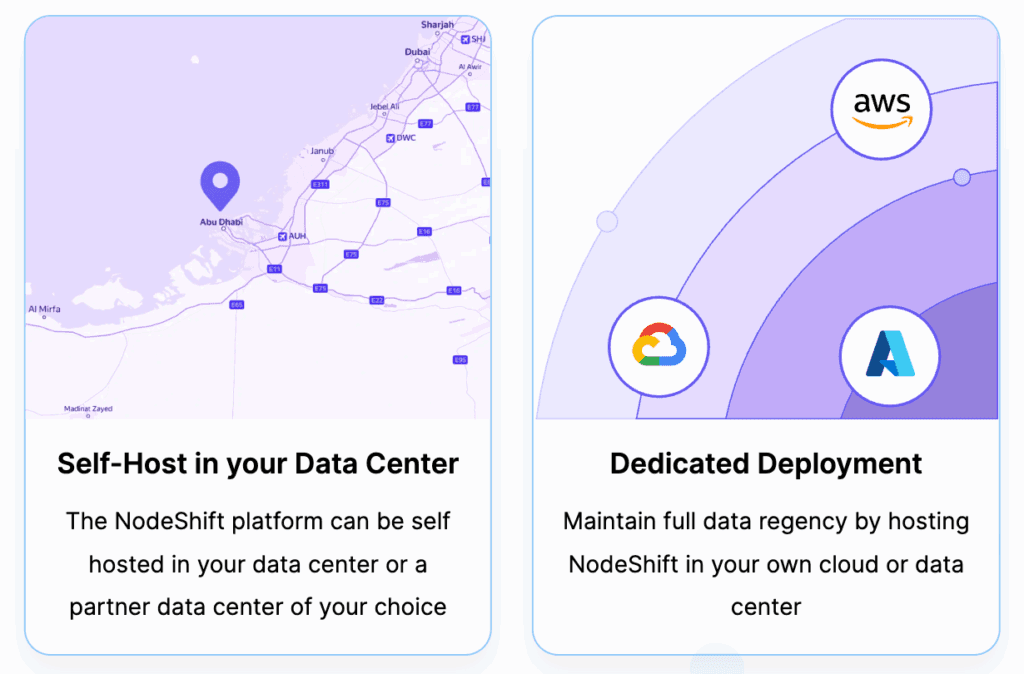
In this article, we’ll look at how to deploy GenAI on-prem, what to avoid, and how a private AI provider like NodeShift AI helps organisations stay compliant with data residency laws.
Why Data Residency Matters for GenAI
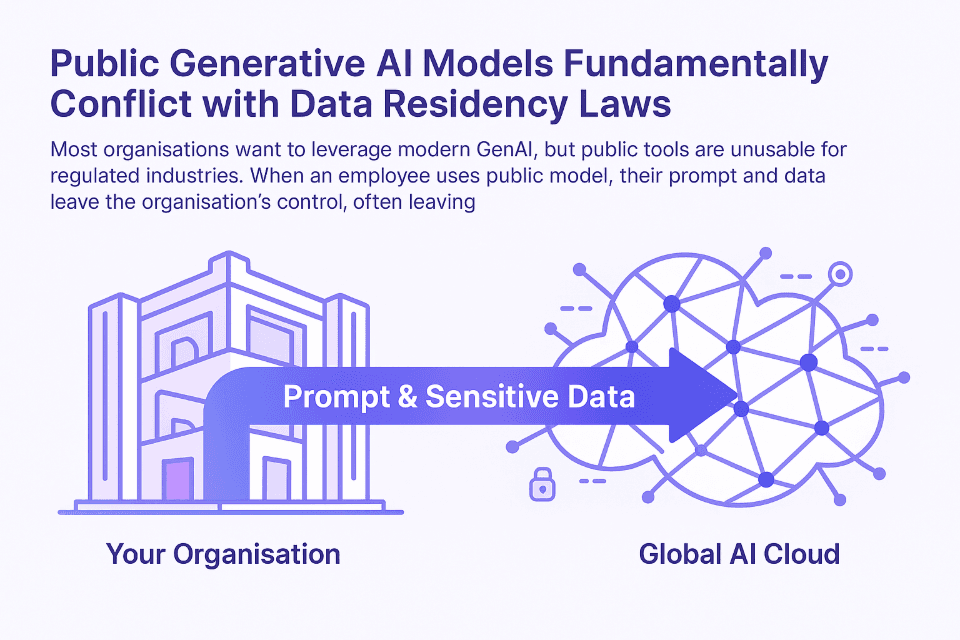
When an employee uses a public AI model, their prompt is usually processed on servers owned by a global vendor. This creates several risks:
- Data may be stored outside the country
- The organisation loses control over how long data stays in memory
- Sensitive information might be exposed to external regulations
- Compliance or audit teams cannot track where the data went
- Some laws simply forbid sending internal documents to external AI tools
For regulated industries, government, finance, healthcare, telecom, and public infrastructure, this is not allowed.
This is why on-prem GenAI has become essential.
What “On-Prem GenAI” Really Means
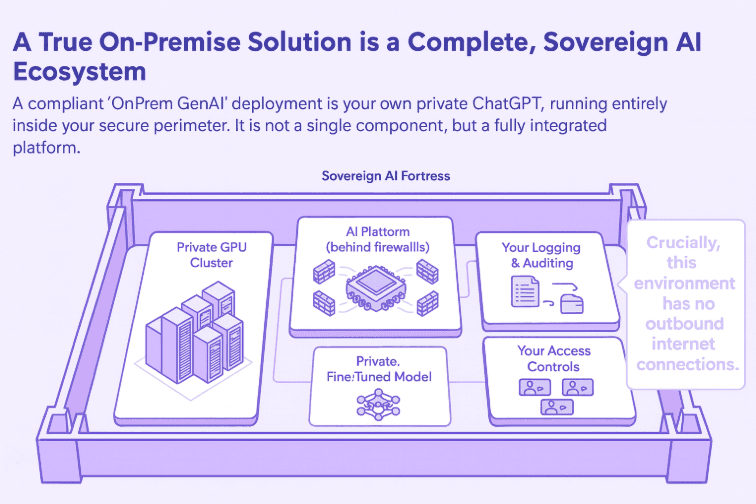
On-prem GenAI is not about just installing a model on a local machine. A proper, enterprise-grade deployment includes:
- A private cluster of GPU servers
- An AI platform running behind your firewalls
- No outbound internet connections
- Your own logging, auditing, and access controls
- A private model that you can fine-tune on your own data
In short: it is your own ChatGPT, running entirely inside your building or your sovereign cloud.
A provider like NodeShift AI helps do this without relying on external clouds.
Key Components of a Compliant On-Prem Deployment
Deploying GenAI on-prem is not difficult, but it must be done carefully. Here are the essential pieces that NodeShift AI takes into account while integrating on-prem GenAI for an enterprise:
1. Air-Gapped or Secure Network Zone
Your AI environment must sit in a secure zone with:
- No direct internet access
- Strict firewall rules
- Only internal users allowed
- All traffic encrypted end-to-end
This ensures data never leaves your environment.
2. Sovereign or Local GPU Infrastructure
You will need GPU servers to run modern GenAI models. Most organisations use:
- NVIDIA H100 or H200
- AMD MI300X
- Or equivalent hardware inside their own racks
A secure provider like NodeShift AI can install and tune this hardware or work with the private cloud you already have.
3. A Private AI Platform
Running only the model is not enough. You need:
- A private interface for employees
- An orchestration layer for safety, logging, and access control
- Model hosting and updates
- Vector search for internal documents
- Prompt guardrails and redaction rules
This ensures safe and compliant usage.
4. Full Data Residency and Access Control
To meet residency laws:
- All prompts, logs, and embeddings must stay inside
- No external API calls
- All model weights stored on your own disks
- RBAC for departments and users
- Full audit trails for compliance teams
This eliminates the risk of sensitive data leaving your perimeter.
How a Private GenAI Provider Like NodeShift AI Helps
Any secure on-prem AI provider can help, but NodeShift AI is a strong example because it focuses on:
- Full data residency
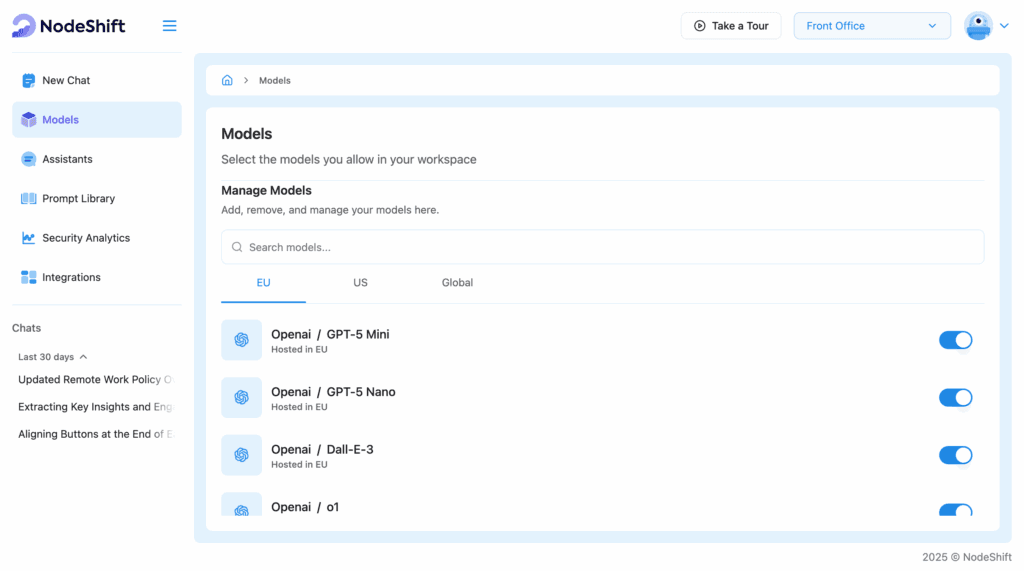
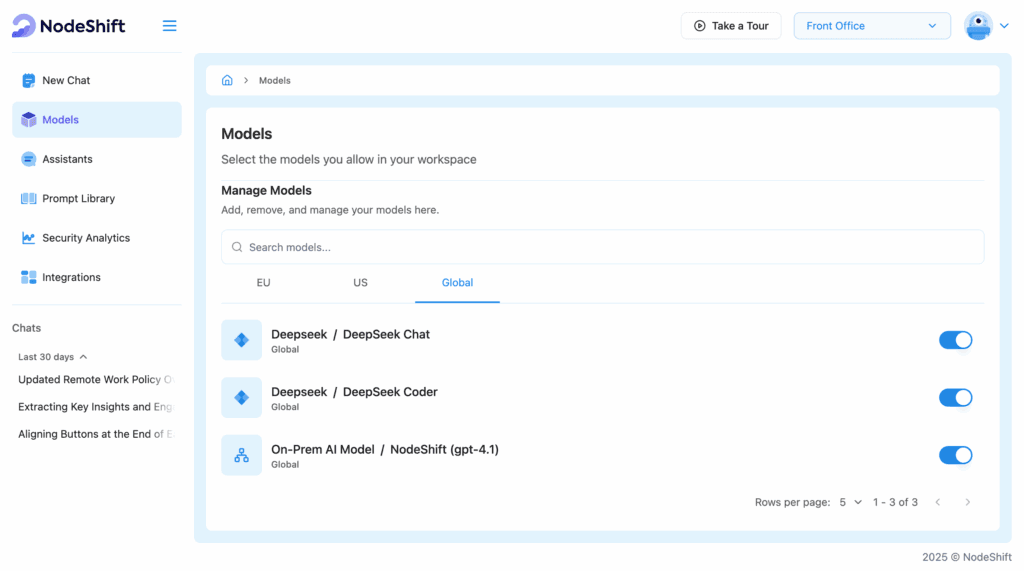
- Self-hosted library of 140+ models inside your servers
- Multilingual support
- No external dependencies
- Compliance with PDPL, NIAF, NESA, and GCC regulations
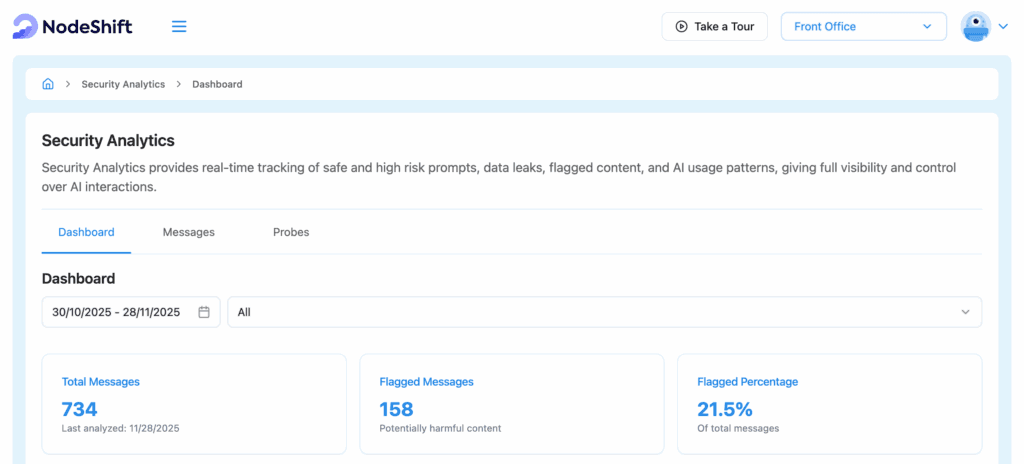
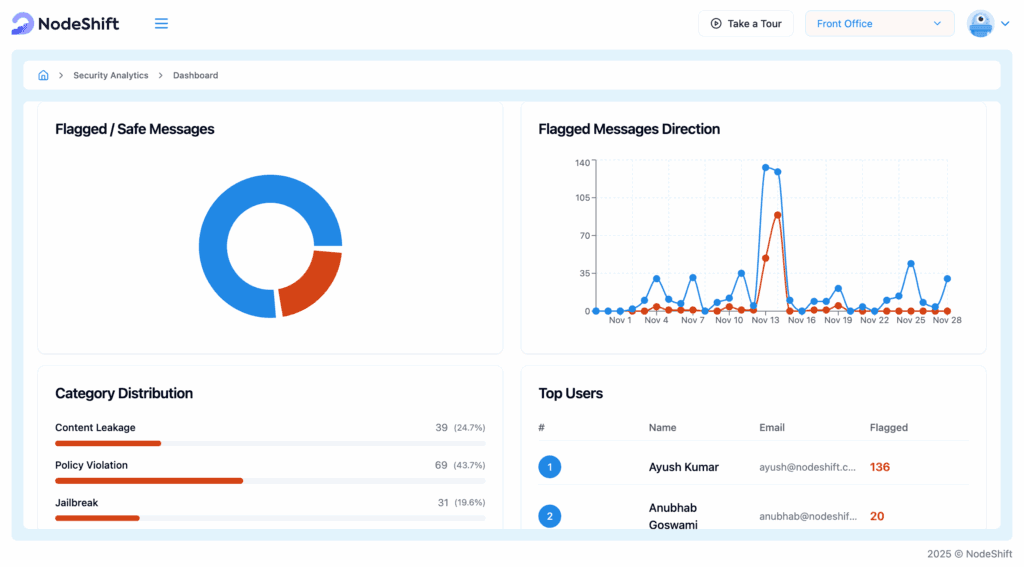
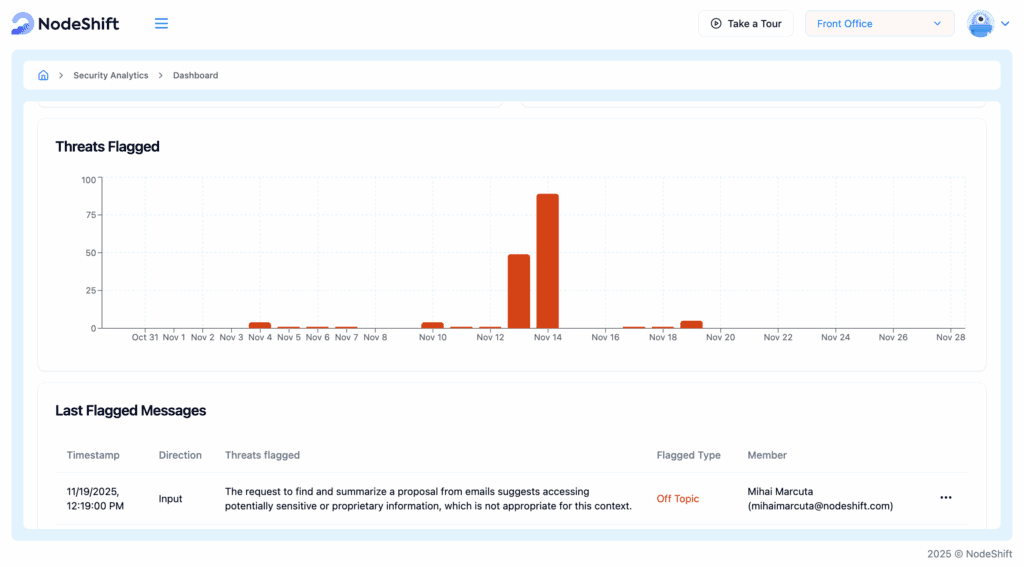
- Full audit logs and prompt-level controls
- White-label internal AI portal
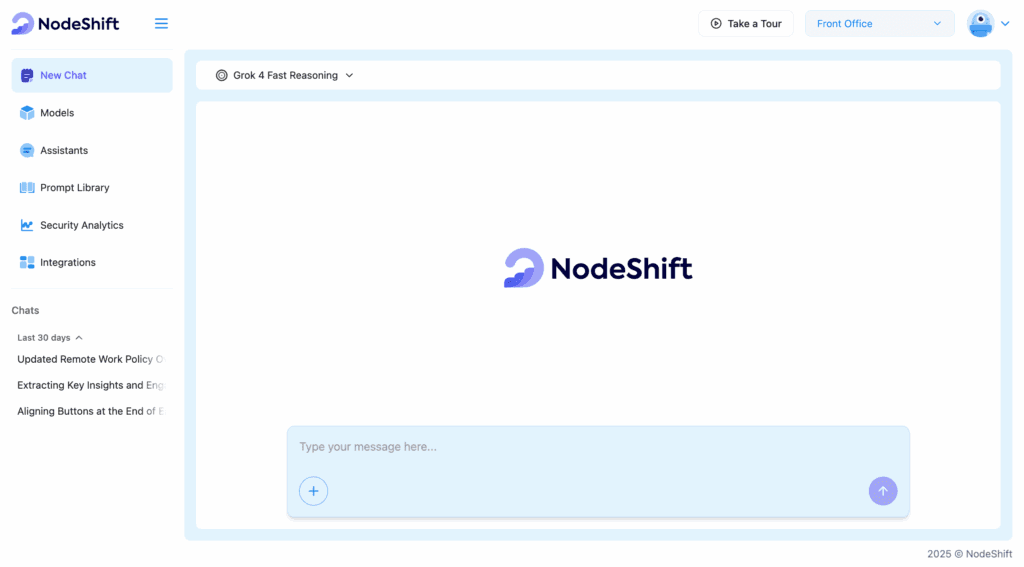
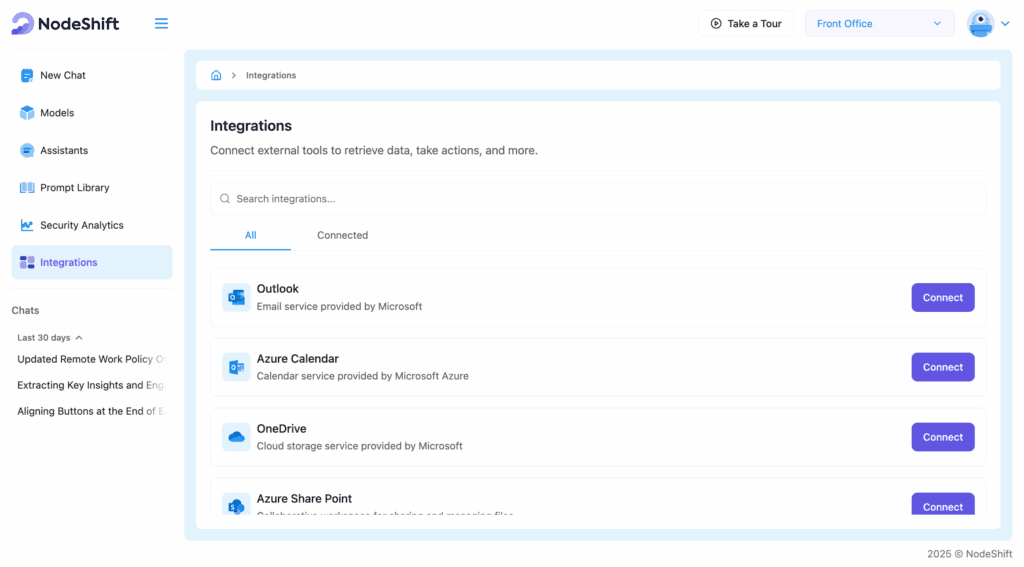
- Integration with 80+ enterprise tools
- Local support and weekly security updates
This makes the deployment smoother and safer, and you avoid the risk of relying on global cloud AI providers whose servers are outside your legal jurisdiction.
Step-by-Step Plan for Enterprises to Practically Deploy On-Prem GenAI with NodeShift AI
Here’s the typical rollout process used by most ministries, banks, and regulated companies.
Step 1: Infrastructure Readiness
Initial set up:
- Racks
- Power
- Cooling
- Network segmentation
- VPN / SSO integration
Step 2: Install the GenAI Platform
Deploy NodeShift AI inside the environment. This includes:
- Model hosting
- Admin dashboard
- User Dashboard
- Guardrails
- Logging
- User authentication
Step 3: Load Internal Documents
Users can start uploading:
- Policies
- Contracts
- Knowledge bases
- Manuals
- Presentations
- Emails
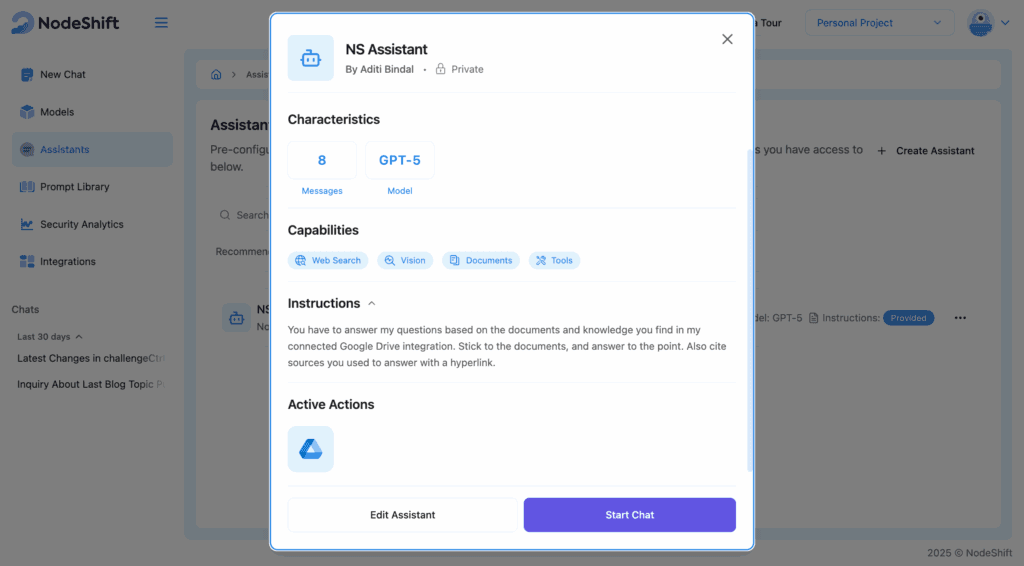
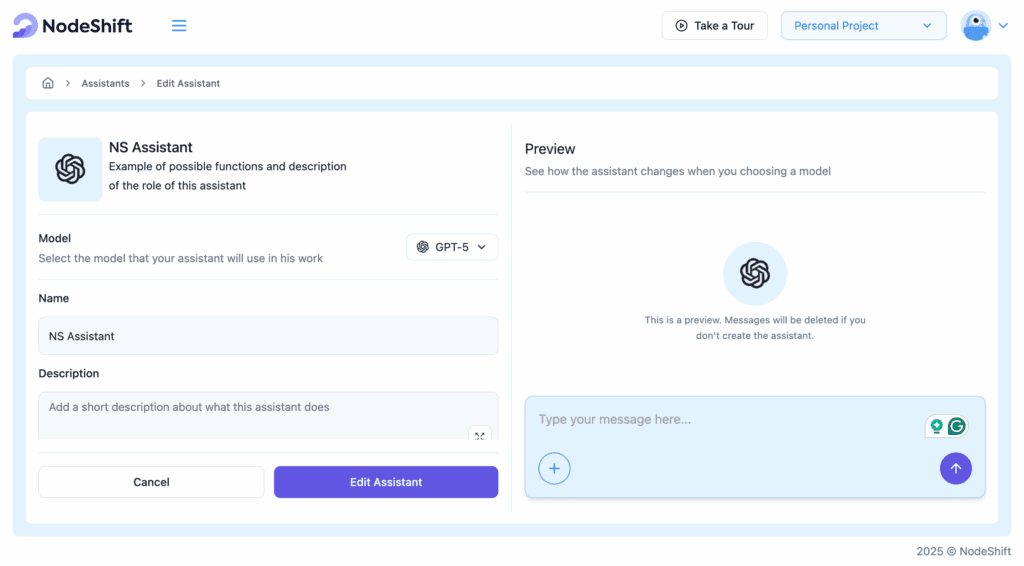
These become searchable through private RAG (Retrieval-Augmented Generation), without using the public internet. Plus, users can also build mini AI chatbots inside the dashboard specifically for a knowledge base.
Step 4: Internal Testing
Departments test:
- Accuracy
- Speed
- Safety checks
- Document grounding
- Multilingual responses (Arabic/English where needed)
Step 5: Organization-Wide Rollout
Once stable, you can expand:
- 100 users → 500 → 1,000 → 5,000+
- Department-specific models
- New use cases
The entire process usually takes 4–6 weeks.
Common Mistakes to Avoid
Many organizations make these errors when attempting on-prem GenAI:
1. Connecting the AI system to the public internet
This breaks data residency immediately.
2. Using Third party SaaS AI tools for internal documents
Documents may be stored overseas, violating regulations.
3. Not having guardrails
Without redaction or safety controls, sensitive data may leak between users.
4. Allowing direct model access without logs
Auditors need full visibility of user activity.
5. Relying on a single cloud region
Even if the cloud region is local, AI inference may run elsewhere.
Conclusion
Deploying GenAI on-prem is now the safest and most reliable way for organisations to use AI without violating data residency laws. When done correctly, it keeps all data inside, gives full control to internal teams, and unlocks the real value of AI without any compliance risk.
A private on-prem AI platform, such as NodeShift AI, helps organisations build a secure AI environment that fits their regulations, their infrastructure, and their internal workflows.
On-prem GenAI is no longer a nice-to-have. For many organisations, it is the only compliant path forward.