HR teams spend a large part of their week writing. New policies. Updated job descriptions. Internal memos. Meeting summaries. Even small announcements take time when you repeat the same steps every day. Most HR departments want help, but they cannot use public AI tools. These tools send data outside the organisation, which is not acceptable for sensitive HR work. Employee records, salaries, performance notes, and internal decisions must stay inside.
This is where a fully private, on-prem AI assistant changes everything. It gives HR the speed of modern AI, without sending data to the internet or to any external cloud. In this article, we’ll look at how a private AI assistant like NodeShift AI works, how it helps HR teams every day, and what it takes to set it up.
NodeShift as an Enterprise-Grade Private AI Assistant
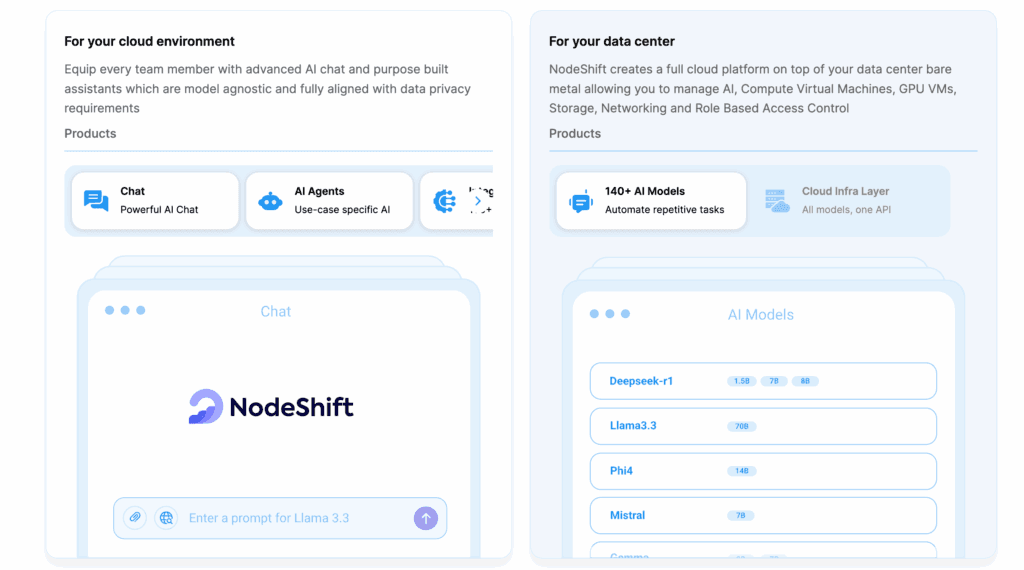
NodeShift AI is a fully private, on-premise, ChatGPT-like generative AI platform that runs entirely inside an organisation’s own network. It enables HR teams to securely draft, summarise, analyse, and automate daily workflows without sending any data to the internet.
Built as a sovereign AI engine, NodeShift AI supports 140+ enterprise-grade AI models, including both closed-source models (ChatGPT, Claude, Gemini) via strict guardrails and fully offline open-source models such as Mistral, LLaMA, and DeepSeek, ensuring complete data residency and compliance.
Why HR Teams Need a Private AI Assistant (Not a Public One)
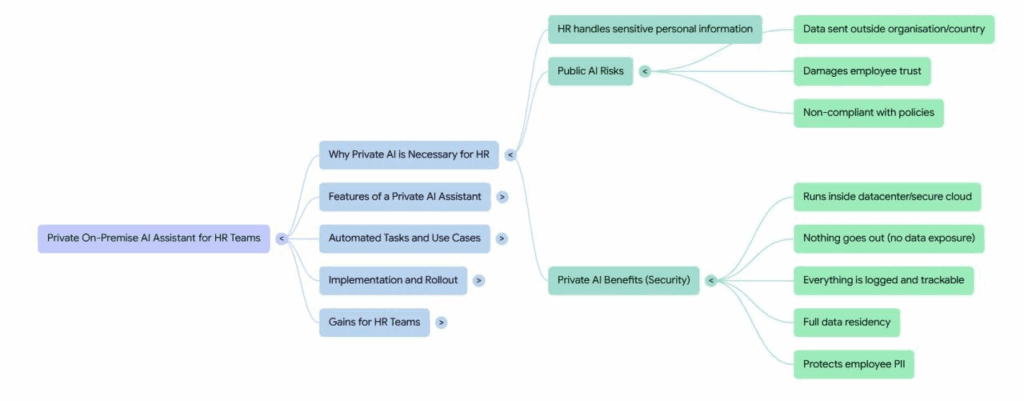
Public AI tools often store or process data outside your country. For HR, this is a problem because:
- HR handles sensitive personal information
- Policies may not allow external tools
- Employee trust can be damaged if data leaves the organisation
- Audits and compliance require clear control over who sees what
A private AI assistant like NodeShift AI runs inside your data center or secure cloud. Nothing goes out. No employee data is exposed. Everything is logged and trackable. It gives HR the same working power with premium tools like ChatGPT or Gemini, but under the organisation’s full control.
What a Private AI Assistant Actually Is
Think of it as your organisation’s own internal ChatGPT:
- Hosted inside your servers or private cloud
- Fine-tuned on your own HR documents
- Integrated with Outlook, Teams, SharePoint, and internal databases
- Accessible only to your employees
- Every response is generated inside your secure network
It understands your policies, job frameworks, tone, and style.
NodeShift AI, a one-of-a-kind Enterprise-level private AI assistant, comes with a library of 140+ ready-to-use AI models and 80+ enterprise connectors (Outlook, Teams, SharePoint, Google Drive, HRMS, and databases). This breadth ensures that HR teams can instantly integrate AI into existing workflows without changing tools or processes.
This way, NodeShift AI acts as a one-stop shop for automating all the tedious & time-consuming, yet essential, everyday tasks of HR teams.
What HR Teams Can Automate Today
Here are the most valuable and practical areas where HR can save hours each week.
1. Drafting and Updating Internal Policies
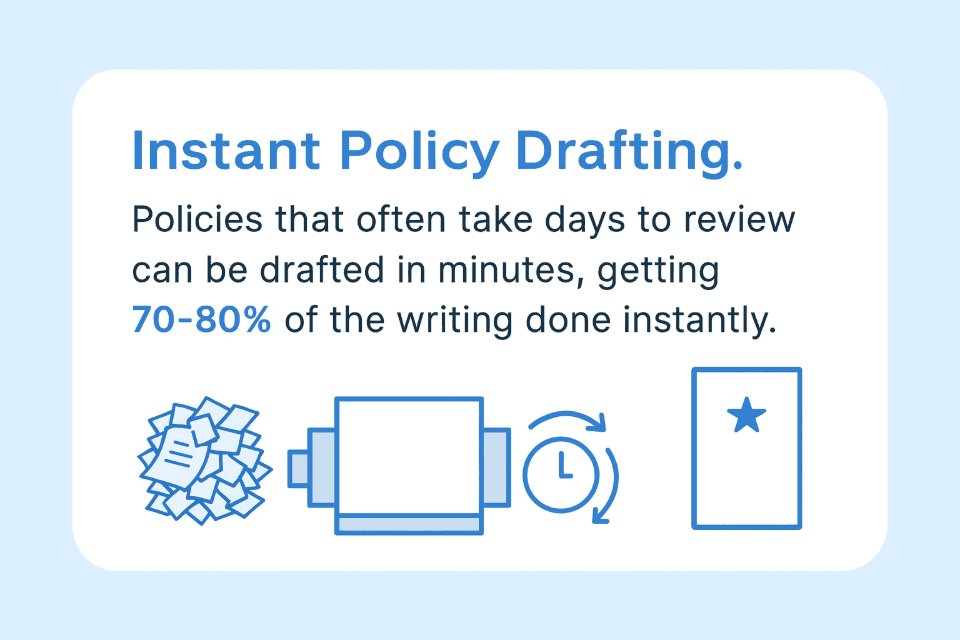
Policies often take days to review, rewrite, and circulate.
A private AI assistant can:
- Draft new policy versions
- Summarise long legal or regulatory documents
- Convert complicated text into easy-to-read guidelines
- Match tone and format across departments
Example:
“Create a short version of the updated remote work policy in simple language.”
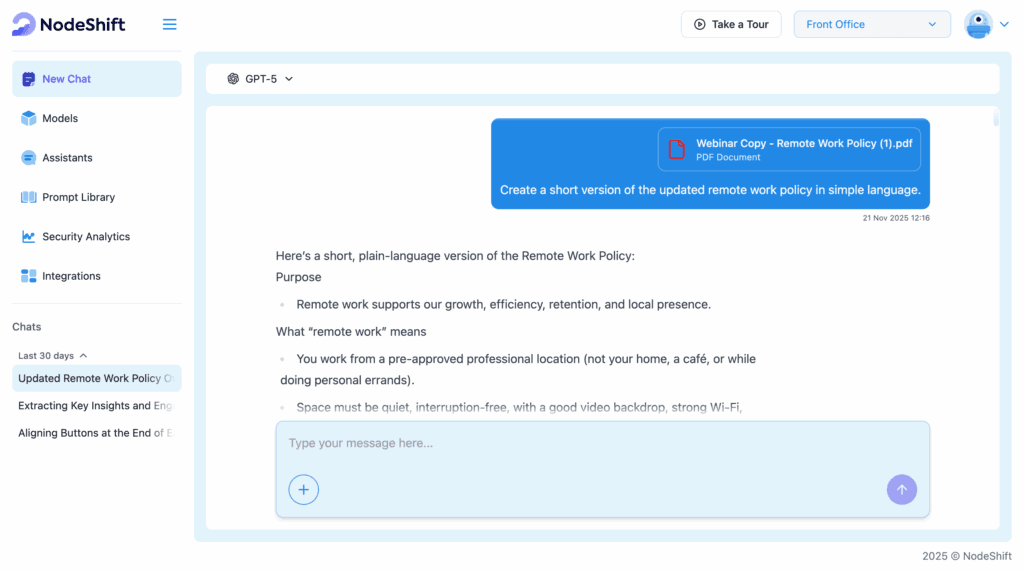
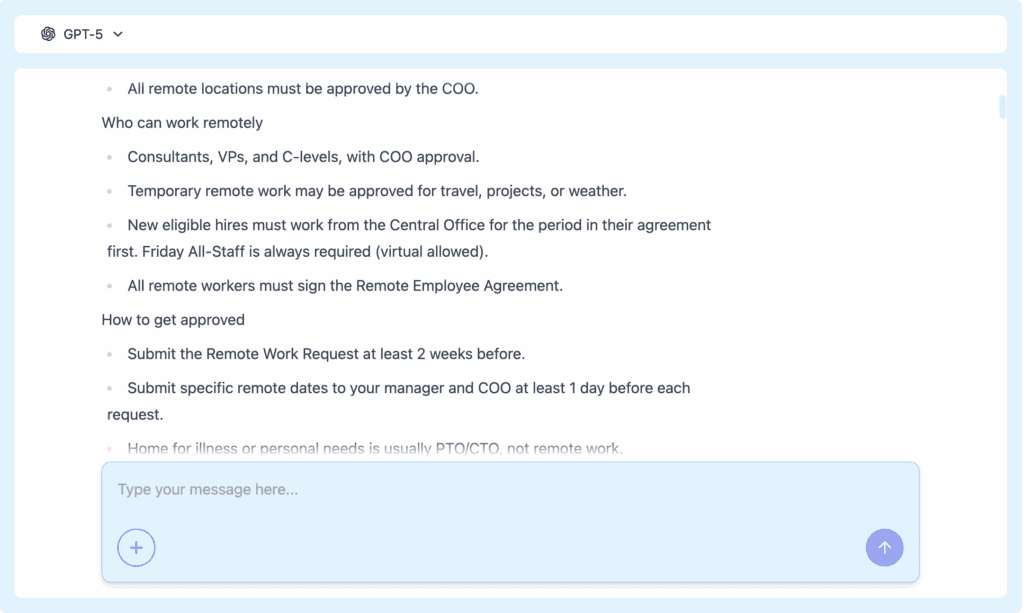
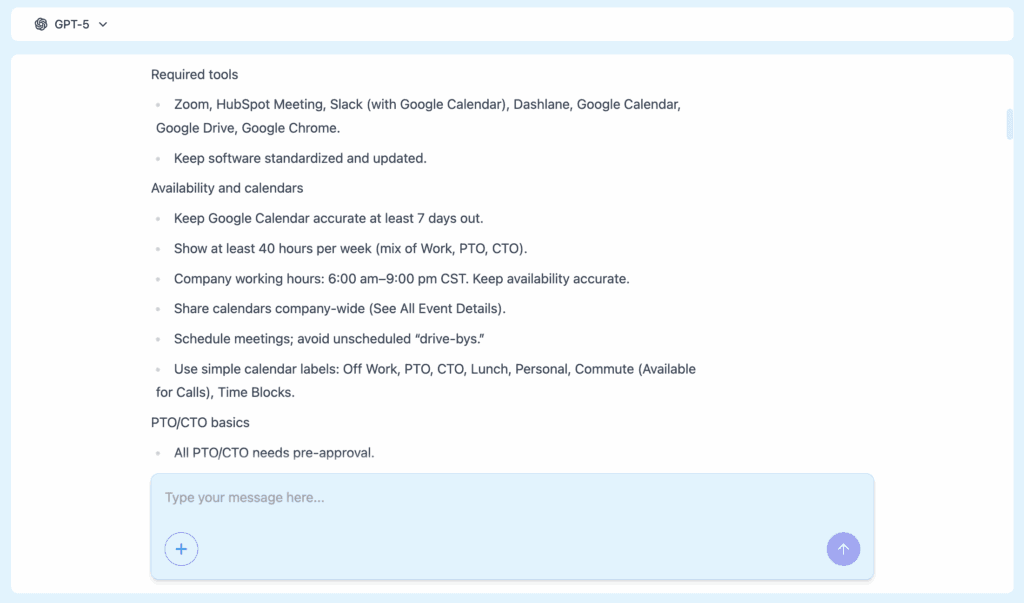
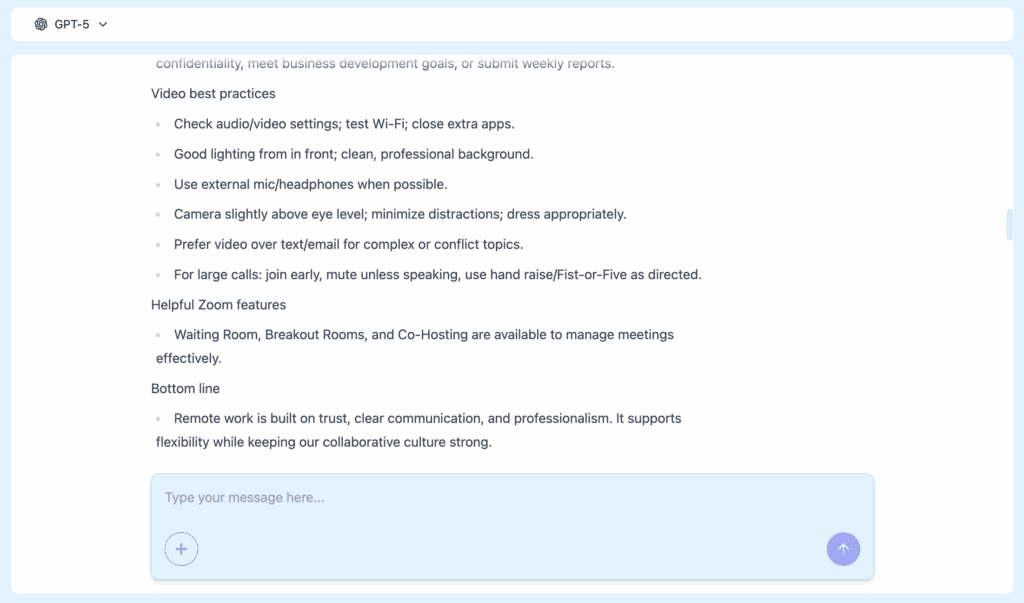
A ~20-pager remote work policy draft => converted to ~500 words, concrete yet comprehensive summary. You still review it, but 70-80% of the writing is already done.
2. Writing Job Descriptions
HR teams usually create, edit, or update job descriptions very often.
A private AI assistant can:
- Generate JDs in seconds
- Follow your internal templates
- Use the competencies and grade levels used within your organisation
- Produce bilingual versions in Arabic and English
Example:
“Write a job description for Senior HR Officer based on our existing HR officer role.”
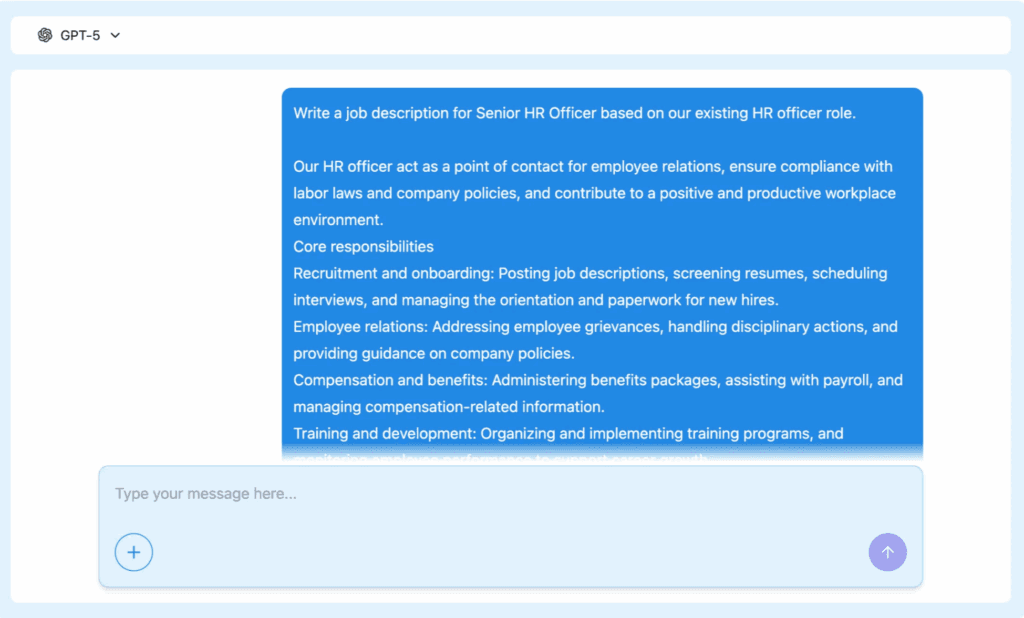
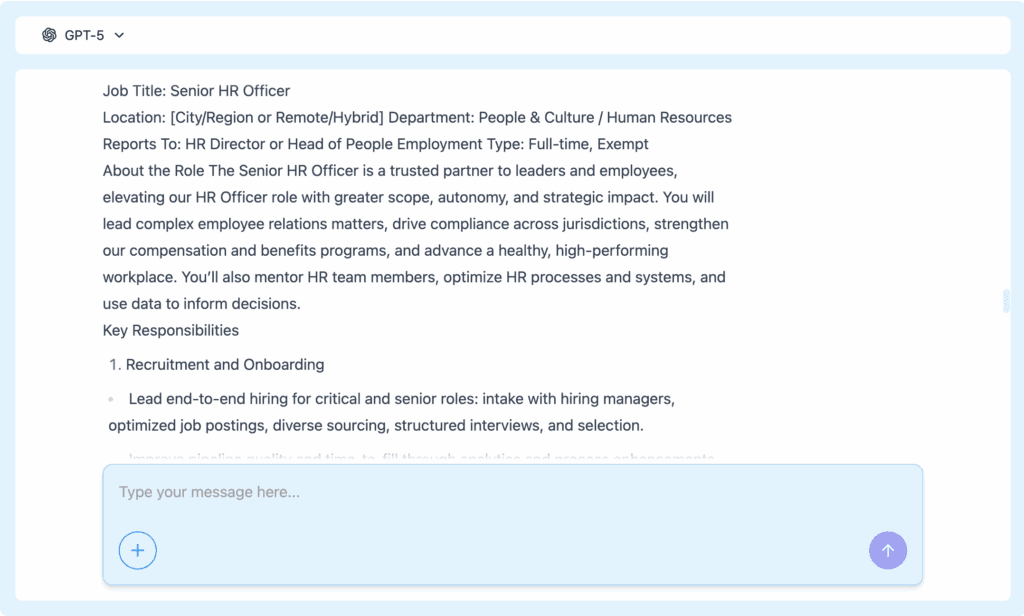
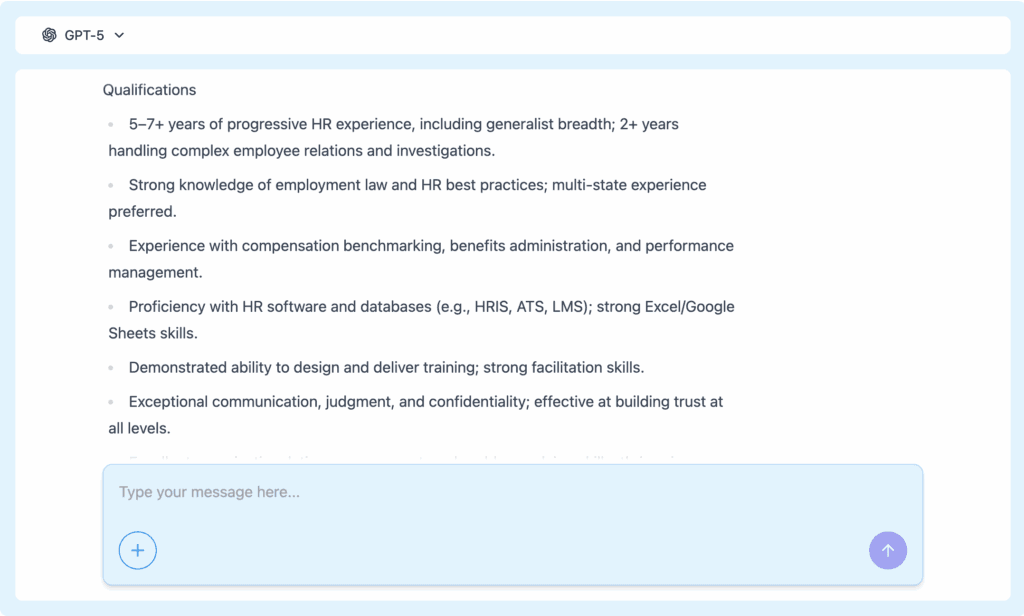
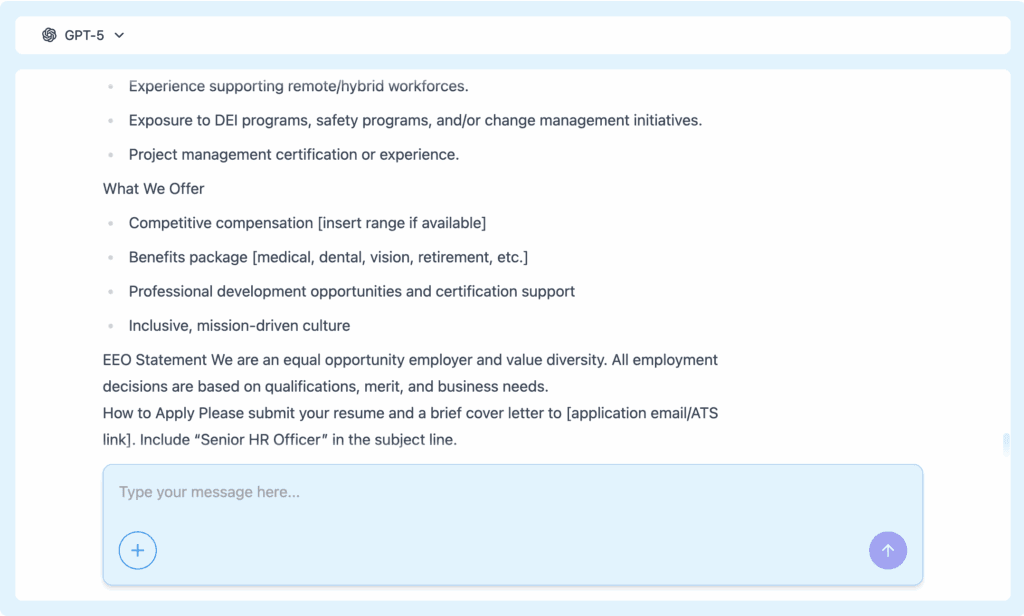
This keeps JDs consistent across departments.
3. Creating Internal Memos and Announcements
Whether it’s a meeting update or a policy change, memos are part of everyday life in HR.
A private AI assistant can:
- Create clean and clear memos
- Summarise meetings and list action items
- Write announcements for all-staff emails
- Turn long reports into short notes for management
Example:
Connect your meeting apps like MS Teams or Google Meet, and anytime, give this prompt to the assistant to get an instant summary without any hassle of maintaining meeting notes.
“Summarise the HR strategy meeting and create a memo for all department heads.”
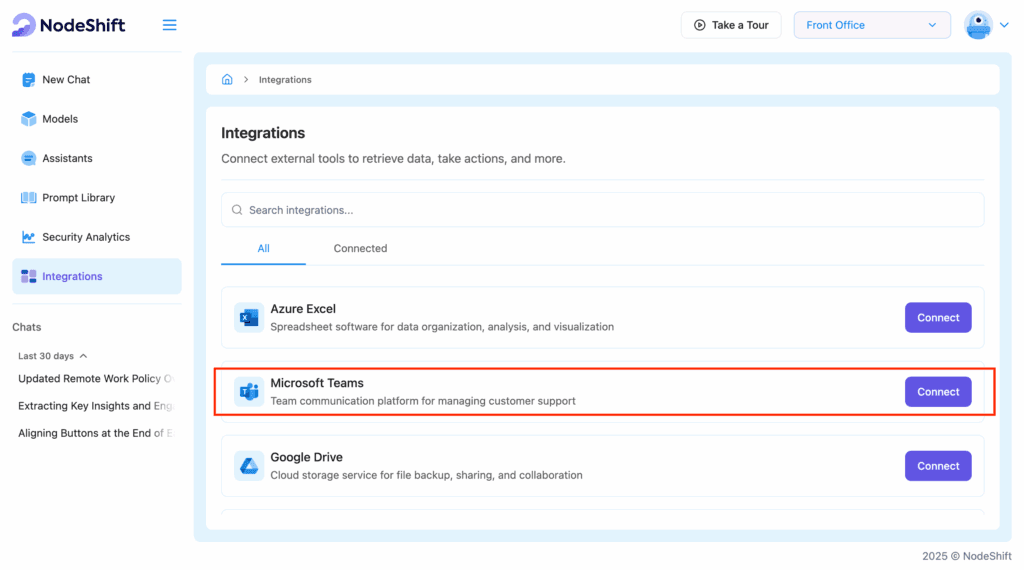
This saves hours each week.
4. Smart Search Across All HR Documents
Instead of searching folders for old PDFs or policy documents, the private AI assistant can answer questions directly based on your internal files.
Example:
Connect your file storage/management apps like Google Docs, MS SharePoint, or OneDrive, and anytime give the assistant a random prompt like this to get your questions answered in seconds without going through all the old, messy docs from a file dump.
“What is the current leave encashment rule for Grade 10 staff?”
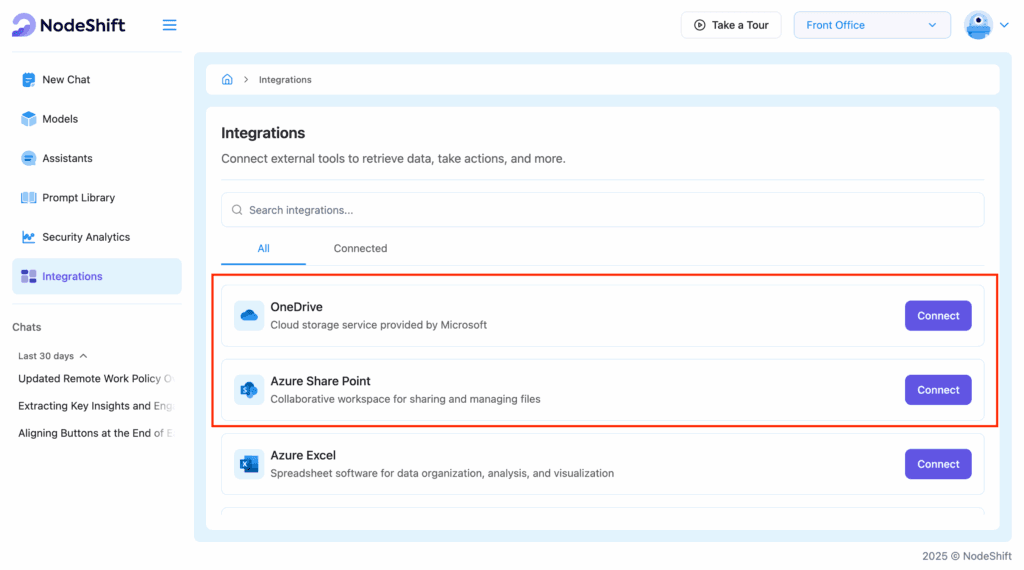
This way, it only uses your documents, nothing from outside.
How It Works
Even though it uses advanced technology, the flow is simple:
- HR uploads policies, job descriptions, memos, and guidelines.
- The system reads these documents and creates a private knowledge base.
- Employees ask questions or request drafts.
- The AI writes answers or drafts using only your internal information.
- Everything stays inside your network, with security controls and audit logs.
No data goes to the internet. No third-party cloud is involved.
How Fast Can HR Roll This Out?
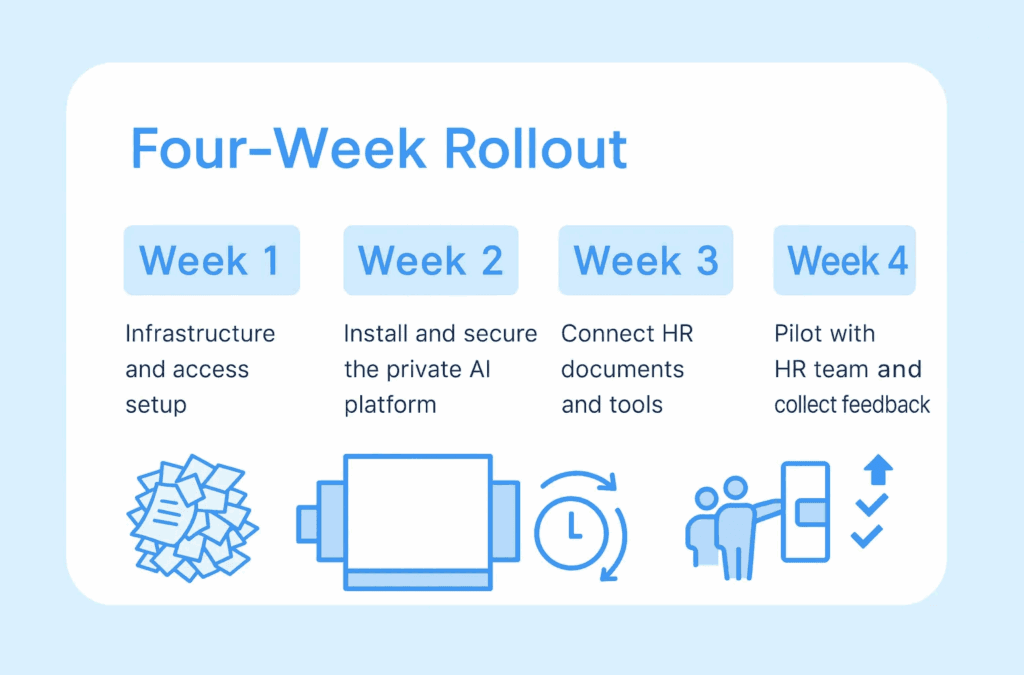
A typical rollout can happen in about four weeks:
- Week 1: Infrastructure and access setup
- Week 2: Install and secure the private AI platform
- Week 3: Connect HR documents and tools
- Week 4: Pilot with HR team and collect feedback
After that, you can expand it to other departments.
Security and Privacy Benefits for HR Teams
A private AI assistant provides:
- Full data residency inside your organisation
- No external API calls
- Encryption for all files
- Role-based permissions
- Internal-only logs
- Protection for employee PII
- Guaranteed compliance with internal and national policies
This makes it safe for employee relations, performance management, compensation work, and sensitive decisions.
What HR Teams Gain From This
Here is what changes for an HR team:
- Hours saved every week on writing
- Faster policy development
- Better quality documents
- Consistent job descriptions
- Easier communication across departments
- Reduced manual work
- Less writing fatigue
- More time for real HR work, strategy, culture, learning, and people relations
In short, HR becomes faster, clearer, more precise, and more effective.
How NodeShift AI Helps HR Teams in AI Adoption at Scale
1. Your own secure AI environment
NodeShift creates a private AI system that runs only inside your company. No internet access, no external cloud, and no data leaving the building. This gives HR teams complete confidence when working with employee files, policies, or internal discussions.
2. Understands your HR documents
NodeShift can learn from your organisation’s policies, job descriptions, memos, and internal guidelines. Over time, it starts giving answers that match your tone, your rules, and your processes, not generic online information.
3. Works fast for everyday tasks
The system is designed to reply quickly, even when many people use it at the same time. HR teams can draft, edit, and summarise documents in seconds, without delays.
4. Connects with HR tools you already use
NodeShift integrates with platforms like Outlook, Teams, SharePoint, and document systems. This makes it easy to pull information, write drafts, or summarise meetings right where HR already works.
5. Built-in privacy and control
Everything is logged and stays inside the organisation. Access can be limited based on roles. This helps HR stay compliant with audit rules and internal policies.
6. Easy to scale across the organisation
NodeShift can start with a small HR pilot and grow to support thousands of staff. It is built to scale without slowing down.
Conclusion
HR teams spend too much time writing. A private AI assistant allows them to automate the writing, not the judgment. It helps HR produce clear, accurate documents faster, without risking employee data, privacy, or compliance. With a secure, on-prem setup, HR finally gets the speed of AI while keeping every piece of information inside the organisation. This is not future technology. It is available today, and you can start seeing results in just a few weeks.